
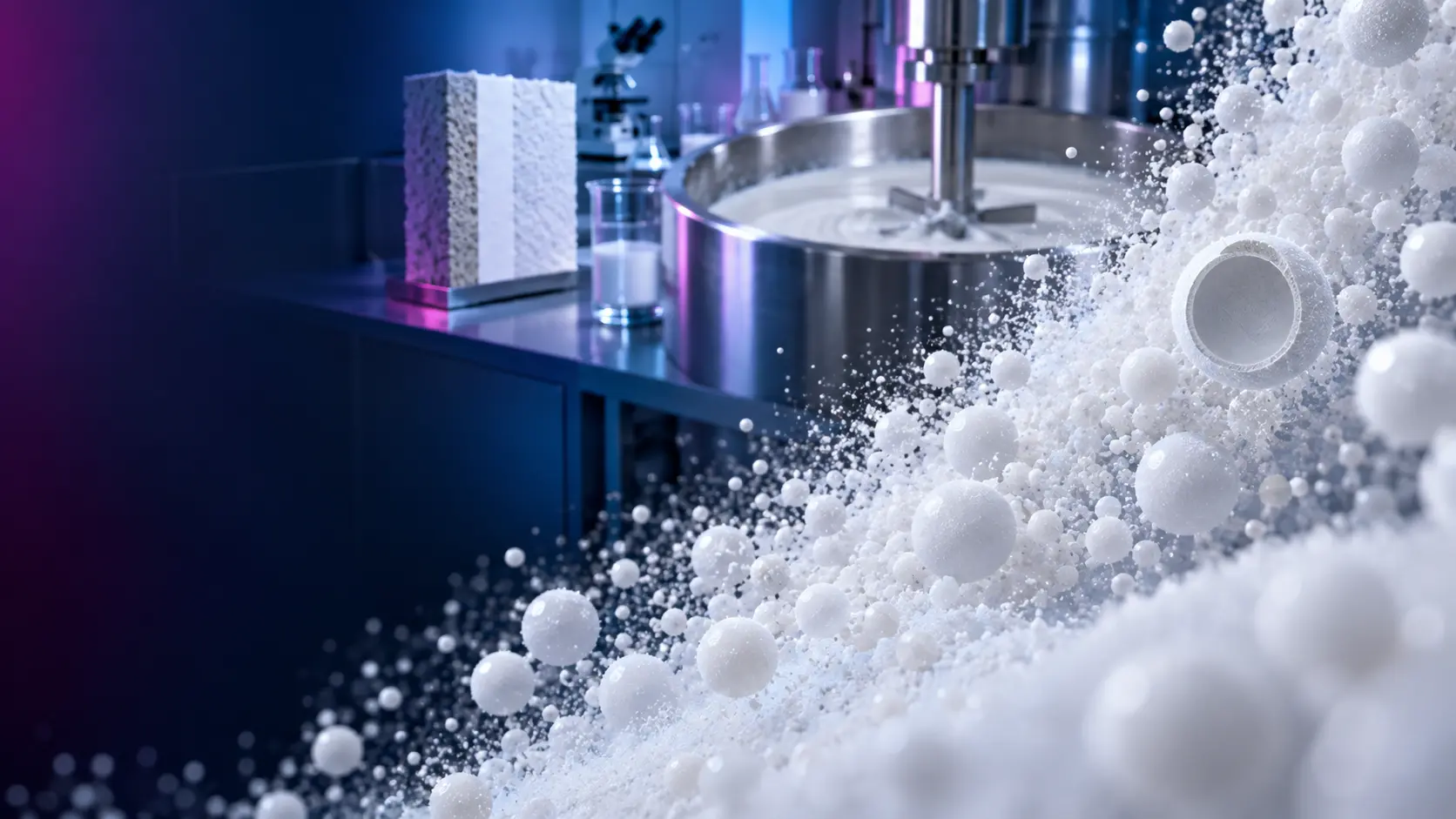
3M™ Glass Bubbles K1
Lightweighting at the lowest K-series density
SODA-LIME BOROSILICATE • HOLLOW MICROSPHERES
Engineered hollow glass spheres that displace heavier fillers and resin with stable, non-porous voids—helping reduce weight while supporting flow, sanding, insulation and dimensional control.
Maximum volume. Minimum mass.
K1 is the lowest-density grade in the 3M K series. Its hollow, spherical geometry occupies formulation volume at a fraction of the mass of conventional mineral fillers.
Extreme lightweighting
Reduces composite density and may lower weight-based filler demand.
Low heat flow
Stable internal voids provide very low calculated thermal conductivity.
Improved processing
Spherical particles can support lower viscosity, better flow and higher volume loading.
Stable filler
Water-resistant, chemically stable, non-combustible and non-porous glass.
BUILT INTO
LIGHTWEIGHT
COMPOUNDS
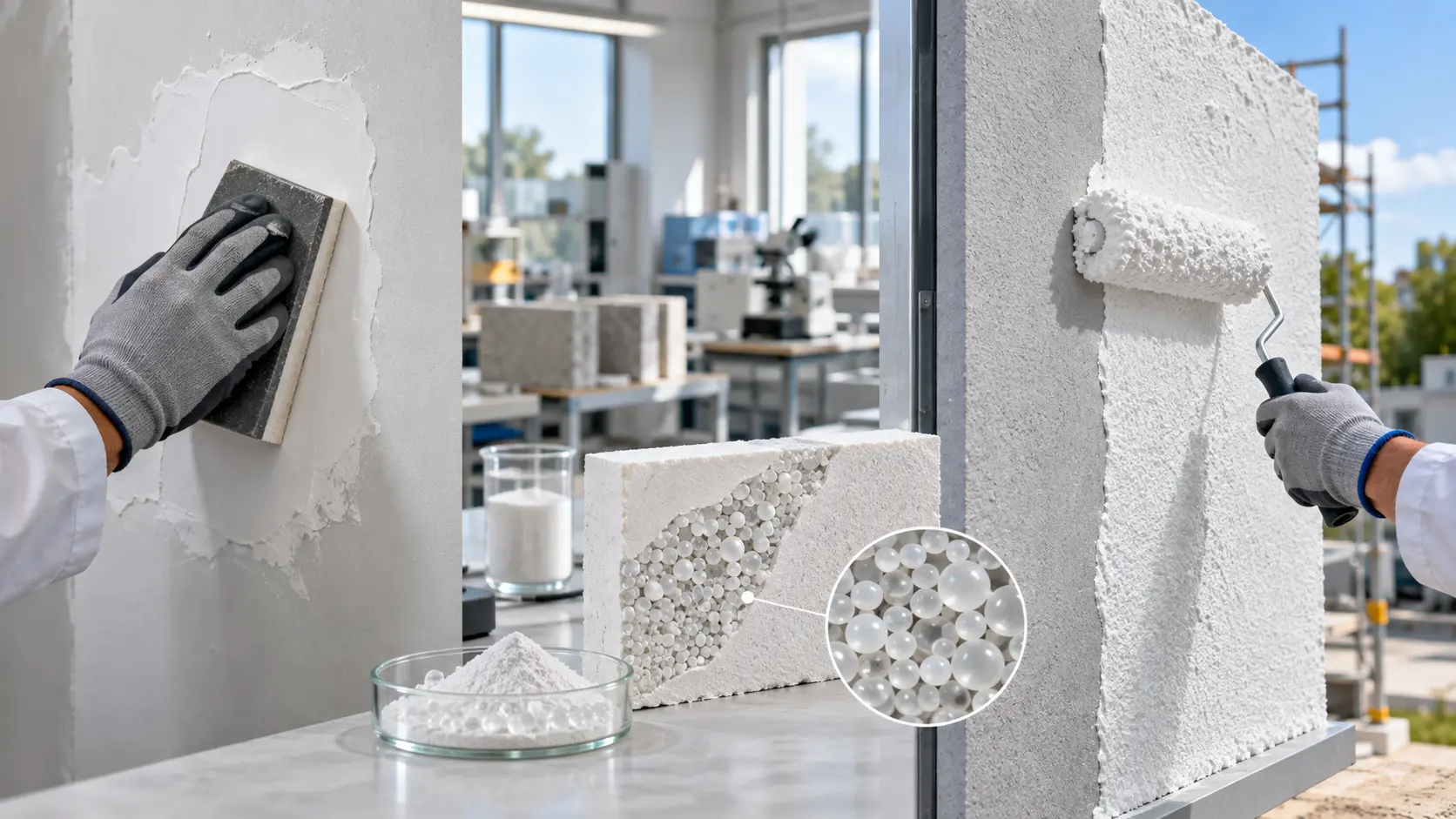
K1 can contribute volume without excessive weight in wall repair compounds and coatings. The visual shows easy sanding and a thermal-coating application concept.
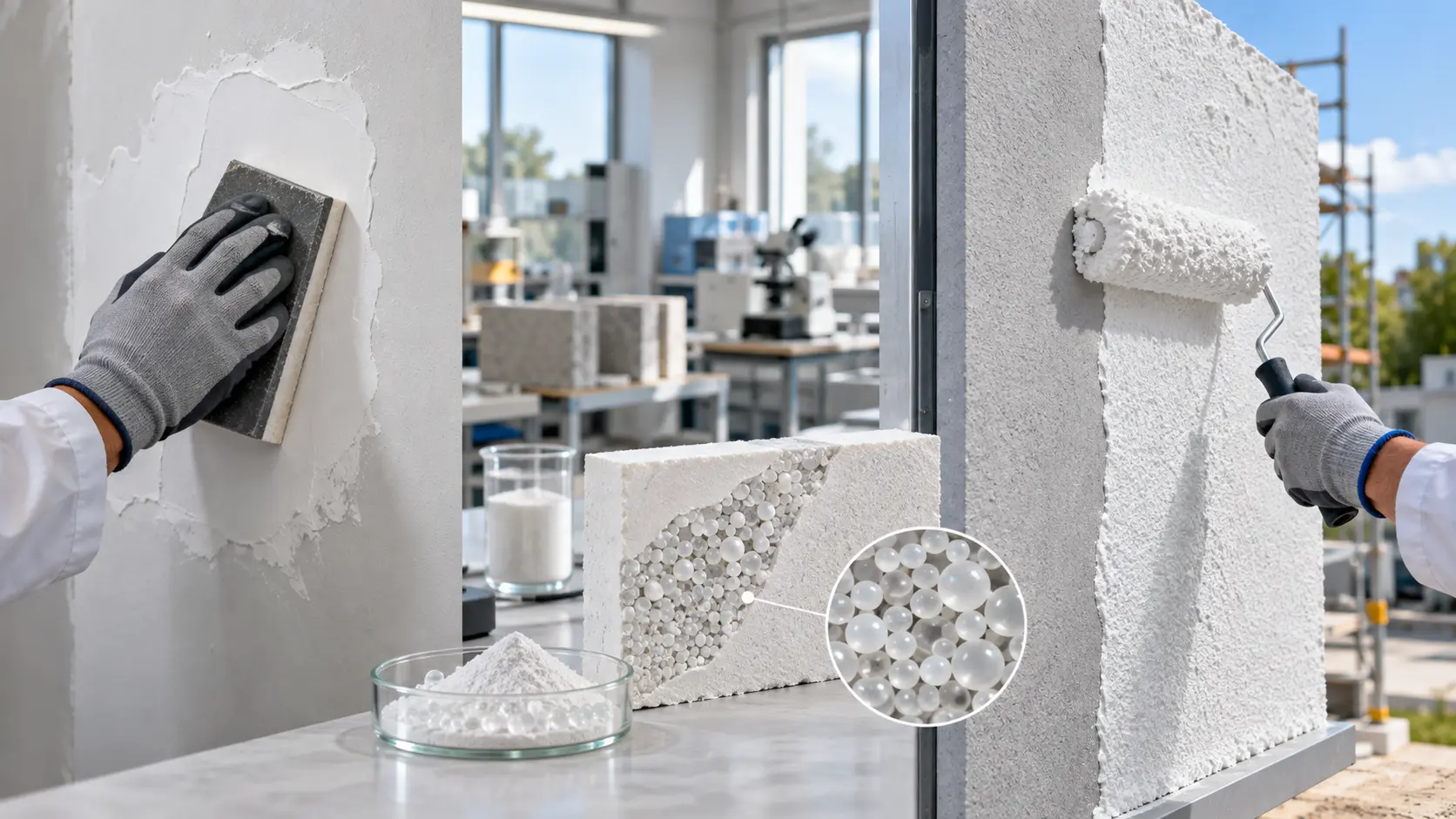
Original conceptual application image. Final performance depends on matrix, loading, mixing and processing pressure.
K1 WITHIN THE
K SERIES
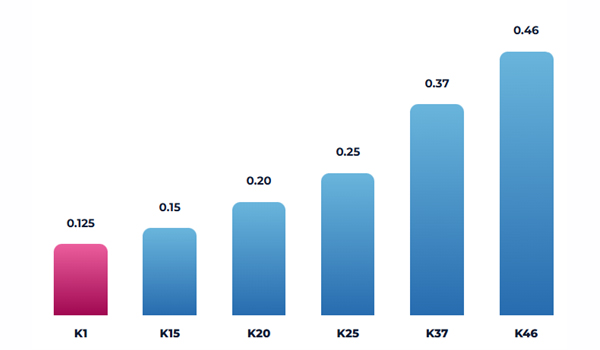
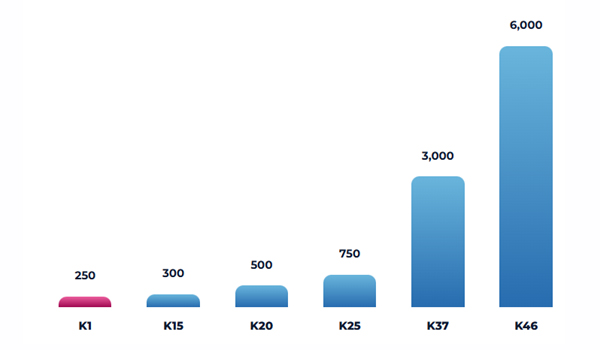
Density rises as stronger K-series grades use more glass structure. Select K1 when minimum density is the priority and process pressure remains compatible with its 250 psi strength level.
Typical true density (g/cm³)
Isostatic crush test pressure (psi)
WHERE K1
CREATES VALUE
The lowest-density grade is best matched to formulations and processes that do not expose the bubbles to pressure above their survival capability.
LIGHTWEIGHT WALL
REPAIR
Volume, reduced mass, easy sanding and a flush paintable finish.
PAINTS & COATINGS
Lower dry-film density and stable voids for insulation-oriented formulations.
CAULKS & ADHESIVES
Lightweight volume extension with non-porous spherical filler geometry.
SYNTACTIC FOAM
Buoyancy in suitable shallow-water systems following pressure validation.
CAST POLYESTER & PUTTY
Reduced density, shrinkage and warpage with appropriate processing.
EMULSION EXPLOSIVES
Density modification where grade survival and process compatibility are confirmed.
PROTECT THE
HOLLOW STRUCTURE
Glass-bubble performance depends on keeping the spheres intact through mixing, transfer and application.
Use low-shear incorporation
Where practical, introduce glass bubbles after high-shear dispersion of other pigments and fillers.
Check the whole process
Evaluate mixer shear, pumping, filtration, spray pressure, casting and compaction against K1’s 250 psi level.
Correct for density
Do not replace dense mineral filler pound-for-pound. Recalculate on volume and target formulation density.
TECHNICAL PROFILE
Typical values are for grade selection and are not release specifications. Use the current 3M technical data sheet and SDS for final qualification.
| Property | K1 typical data |
|---|---|
| Composition | Water-resistant, chemically stable soda-lime borosilicate glass |
| Appearance | White, free-flowing hollow microsphere powder |
| Typical true density | 0.125 g/cm³ |
| True density range | 0.10–0.14 g/cm³ |
| Isostatic crush test pressure | 250 psi |
| Fractional survival | 90% target; 80% minimum |
| Particle size by volume | D10 30 µm; D50 65 µm; D90 115 µm; effective top size 120 µm |
| Calculated thermal conductivity | 0.047 W/m·K at 21°C |
| Typical floaters | 96% by bulk volume; 90% minimum |
| Dielectric constant, K series | 1.2–1.7 at 100 MHz, theoretical calculation |
Need Our Services?
Call: +91 97695 93030
Work Hours
Mon – Sat: 9:00 AM – 6:00 PM IST
Email Us
support@geoconproducts.com